
East Bay and North Bay Real Estate 2026: A Complete Regional Market Guide
By Eduardo Ledesma, Real Estate Consultant & Auctioneer · DRE# 01198626
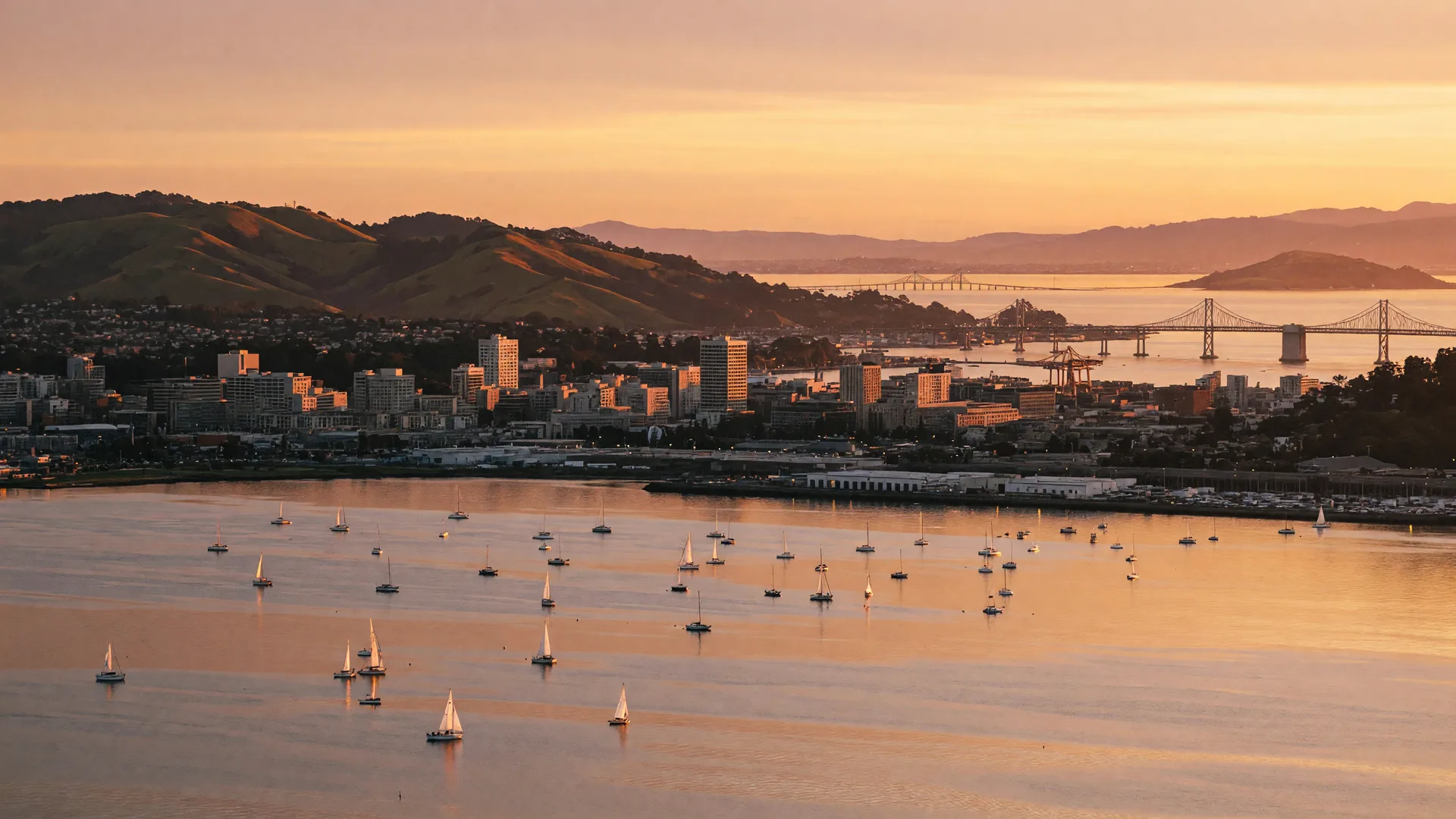
The East Bay and North Bay real estate market in mid-2026 is defined by one word: diversity. From the affordable entry points in Solano County and eastern Contra Costa to the premium suburbs of the Tri-Valley and the urban energy of Oakland and Berkeley, each submarket tells a different story. Understanding how these markets compare is essential whether you are buying your first home, upgrading for a growing family, downsizing, or investing.
Across Contra Costa County, the median sale price sits at approximately $837,000, up 2.1% year-over-year. Alameda County commands a median of roughly $1,212,000, up 5.4% year-over-year. Solano County, by contrast, offers median prices well under $600,000 in many areas. Homes in both Contra Costa and Alameda counties sell in an average of just 17 days, making preparation and pre-approval critical for buyers.
A market-by-market breakdown of the region
Contra Costa County: Value and variety across the corridor
Contra Costa County stretches from the San Francisco Bay shoreline east to the Sacramento River Delta, and its housing market reflects that geographic range. Here is how the key cities stack up:
| City | Median Price (est.) | Days on Market | YoY Trend |
|---|---|---|---|
| Walnut Creek | $949K — $1.04M | 14 days | Up 5–18% |
| Concord | $725K — $755K | 14–36 days | Stable / slight dip |
| Richmond | $637K (median sold) | 20 days | Up 6.5% |
| San Pablo | $520K — $566K | 55–61 days | Mixed / slightly down |
| Antioch | $600K — $615K | 21–28 days | Slight increase |
| Pittsburg | $570K — $620K | 20–35 days | Moderate growth |
What stands out is the spread. Walnut Creek and the Lamorinda area command premium prices driven by schools, downtown walkability, and BART access. Concord offers solid middle-market value with homes $200,000 to $300,000 less than nearby Walnut Creek. Further east, Antioch and Pittsburg provide the most accessible single-family home prices in the county, with new developments like Tuscany Meadows and San Marco attracting first-time buyers and families.
Richmond and San Pablo offer two very different propositions. Richmond's Marina Bay and Point Richmond neighborhoods have seen strong appreciation and quick sales, while San Pablo remains the most affordable entry point in West Contra Costa at roughly $520,000 to $566,000. San Pablo homes take longer to sell (55 to 61 days), which can give buyers more time to evaluate options and negotiate.
Alameda County: Urban energy and premium suburbs
Alameda County spans from the urban core of Oakland and Berkeley to the affluent suburbs of the Tri-Valley. The county-wide median of $1,212,000 tells only part of the story.
| City | Median Price (est.) | Days on Market | Notable |
|---|---|---|---|
| Berkeley | $1.4M — $1.6M | 14–21 days | Top schools, university area |
| Oakland | $850K — $884K | 14–21 days | Neighborhood diversity |
| Fremont | $1.4M — $1.5M | 12–18 days | Tech corridor demand |
| San Ramon | $1.3M — $1.5M | 11–16 days | Top-tier schools |
| Dublin | $1.2M — $1.4M | 12–18 days | Fastest-growing city |
| Pleasanton | $1.5M — $1.7M | 10–16 days | Downtown lifestyle |
| Livermore | $1.0M — $1.1M | 14–22 days | Wine country value |
In Oakland, neighborhood matters enormously. Rockridge, Montclair, and the Grand Lake area command prices well above the city median, while parts of East Oakland offer more accessible entry points. For buyers in the $600,000 to $800,000 range, condos and townhomes in Oakland and Berkeley provide a realistic path to homeownership in Alameda County.
The Tri-Valley cities of San Ramon, Dublin, Pleasanton, and Livermore continue to attract families and tech workers with easy access to the I-580 and I-680 corridors. Livermore stands out as the value play within the Tri-Valley, with median prices around $1 million to $1.1 million compared to Pleasanton's $1.5 million-plus. Fremont similarly commands a premium thanks to its location between San Jose and Oakland and its schools.
Solano County: The North Bay's affordability anchor
For buyers priced out of the East Bay, Solano County offers the most accessible Bay Area real estate still within commuting distance. Vallejo's median home price sits around $511,000, while Fairfield ranges from approximately $532,000 in the central and east areas to $691,000 in west Fairfield and Green Valley.
The trade-off is commute time. Vallejo to San Francisco takes about 45 to 60 minutes via I-80 or the Vallejo Ferry. Fairfield to Oakland is about 50 to 70 minutes. But for many buyers, that extra time is worth the savings. A $500,000 budget in Vallejo can buy a move-in-ready single-family home with a yard, while the same budget in Berkeley or Oakland might only get a small condo or a fixer-upper.
Fairfield benefits from the economic stability of Travis Air Force Base and a growing retail and dining scene along the I-80 corridor. Vallejo's historic downtown and waterfront revitalization continue to attract attention, with the ferry providing a direct commuter link to San Francisco.
Key trends shaping the market across all three counties
Several cross-cutting trends are shaping the East Bay and North Bay markets in 2026:
- Mortgage rates are gradually easing. After peaking above 7%, rates are projected to settle around 6% through the second half of 2026. This is bringing buyers back into the market and may increase competition in the months ahead.
- Inventory remains tight. Contra Costa County has roughly 1,400 active listings and Alameda County around 1,200 as of mid-2026. That is less than one month of supply in most price ranges.
- Sold-to-list ratios remain elevated. In Alameda County, homes are selling at an average of 110% of asking price. In Contra Costa, the figure is closer to 101% to 102%.
- New construction is concentrated in eastern Contra Costa and Solano County. Areas like Pittsburg, Antioch, and Fairfield have seen the most new development, attracting buyers looking for modern floor plans and energy-efficient features.
- Remote and hybrid work continues to shape demand. The ability to work from home part of the week has made longer commutes more tolerable, pushing demand outward to areas like the Tri-Valley, eastern Contra Costa, and Solano County.
What this means for buyers and sellers right now
For buyers
The key is knowing which market fits your budget and lifestyle before you start touring. A buyer with $600,000 to $750,000 to spend has very different options in Antioch, San Pablo, or Concord compared to Walnut Creek or Pleasanton. Get pre-approved early, explore down payment assistance programs like CalHFA, and work with a lender who understands the nuances of each city's appraisal patterns.
If you are flexible on location, consider expanding your search to include cities you might not have considered. San Pablo offers entry prices under $550,000. Pittsburg has brand-new construction in the $570,000 to $620,000 range. Vallejo gives you Bay Area waterfront living at half the price of Berkeley or Oakland.
For sellers
Pricing remains the single most important factor. Homes priced correctly from day one sell faster and for more money than homes that start high and drop later. In Walnut Creek and the Tri-Valley, where competition is fierce and days on market are in the single digits to low teens, well-priced homes can still generate multiple offers. In slower markets like San Pablo, strategic pricing and professional presentation become even more critical.
Consider an online bidding strategy to maximize exposure and create transparent competition among buyers. This approach has been particularly effective in Contra Costa and Solano County, where it gives sellers a clear picture of buyer demand without the guesswork of traditional negotiations.
Ready to explore your options?
Whether you are buying your first home in Antioch, selling a family property in Walnut Creek, or looking at investment opportunities in Vallejo, I can help you understand the market and make a confident decision. No pressure, just good information.
Schedule a ConsultationFrequently asked questions about the East Bay market
How much home can I afford in the East Bay?
That depends on your income, down payment, and current mortgage rates. With rates around 6% as of mid-2026, a buyer earning $120,000 per year with a 10% down payment could typically qualify for a home in the $500,000 to $600,000 range, making Antioch, Pittsburg, San Pablo, and Vallejo realistic targets. Higher incomes or larger down payments open up Concord, Richmond, and parts of Oakland.
Do I need 20% down to buy a home in the Bay Area?
No. FHA loans allow as little as 3.5% down, and conventional loans can go as low as 5% for qualified buyers. CalHFA and other down payment assistance programs can provide additional help for first-time buyers. I have worked with many buyers who purchased their first home with less than 10% down, including duplexes and triplexes using FHA financing.
Which East Bay city offers the best value right now?
That depends on your priorities. For pure affordability, Antioch, Pittsburg, San Pablo, and Vallejo offer the lowest entry prices. For a balance of price and location, Concord and Richmond provide strong value with good commute options. In the Tri-Valley, Livermore is the most accessible entry point compared to Pleasanton, Dublin, or San Ramon.
Should I sell now or wait for a better market?
There may be an opportunity here depending on your situation. If you are selling one home and buying another, the spread between markets matters more than the absolute price. If mortgage rates ease further, more buyers may enter the market, potentially increasing competition. I can help you run the numbers for your specific property and goals.
How does online bidding work for selling my home?
Online bidding creates a transparent, competitive environment where pre-qualified buyers submit offers publicly. This approach maximizes exposure, reduces negotiation time, and often results in stronger final prices. It is especially effective in markets with strong buyer demand like the East Bay, where multiple-offer situations are common.