
Rodeo and Crockett in 2026: West Contra Costa’s I-80 Waterfront Towns
By Eduardo Ledesma, Real Estate Consultant & Auctioneer · DRE# 01198626
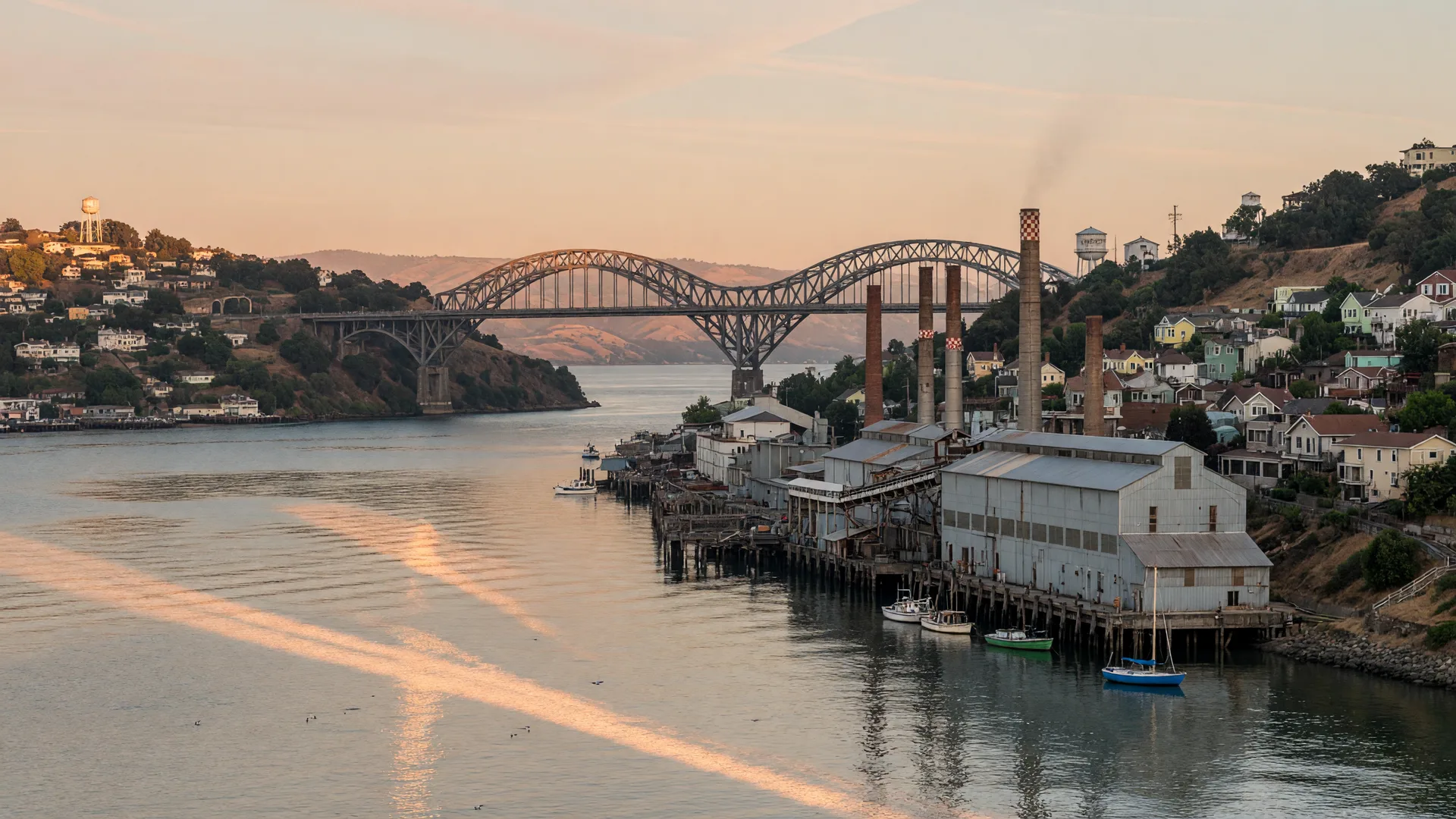
Two of the most underrated communities on the Bay Area’s map sit side by side on Interstate 80, between Pinole and the Carquinez Bridge: Rodeo and Crockett. Both are small, unincorporated Contra Costa County towns on the southern shore of the Carquinez Strait, and as of fall 2026 both still offer homes at roughly a $700,000 median, a price point that has largely disappeared from the rest of the inner East Bay. For buyers who want waterfront character and commuting access without Berkeley or Oakland prices, this stretch along the strait deserves a serious look.
What makes Rodeo and Crockett different from the towns around them?
Rodeo holds roughly 9,650 residents and Crockett is smaller, around 3,200. Neither is a city: both are unincorporated communities, which means planning, roads, and services come from Contra Costa County rather than a local municipal government, and residents weigh in through the Rodeo Municipal Advisory Council. There is no big downtown strip and no BART station. What there is instead is real small-town character: hillside houses with bay and bridge views, a working waterfront, and neighbors who have been around for decades. Crockett’s identity is wrapped up in its C&H sugar refinery, operating since 1906, with the glowing “C&H Pure Cane Sugar” sign that has watched over the town from the hillside for years and is visible from the bridge. Locals still call Crockett “Sugar Town.”
How much do homes cost in Rodeo and Crockett right now?
Published fall 2026 readings put median home values near $700,000 in both towns, with Rodeo averaging around $688,000 and Crockett ranging from roughly $699,000 to $705,000 depending on the data provider and the month. Crockett’s numbers have also been rising, with year-over-year readings reported in the low double digits in recent months, so the market here is firming even while it stays well below the priciest waterfront addresses in Point Richmond. For the $300,000 to $1,500,000 range most of my clients work in, these towns sit comfortably in the middle: far more affordable than El Cerrito, Albany, or Walnut Creek, and a genuine value for water views.
What is the commute actually like?
Both towns sit right on I-80, with Crockett directly below the Carquinez Bridge and Rodeo a few miles south toward Pinole. Downtown San Francisco is roughly 25 miles away, about 40 to 45 minutes in light traffic and longer at peak hours, with the stretch across the Bay Bridge the usual pinch point. Vallejo is immediately across the bridge, and Oakland and Berkeley lie about 15 to 20 miles south. Public transit is workable but not quick: AC Transit connects these towns to the El Cerrito del Norte BART station, and the combined bus-and-train trip into San Francisco typically runs well over an hour. If a car-free commute matters, a home closer to BART will serve you better.
What schools serve Rodeo and Crockett?
Both towns are served by the John Swett Unified School District, one of the smallest in the county. Local campuses include Rodeo Hills Elementary in Rodeo, Carquinez Middle School in Crockett, and John Swett High School in Crockett, which also serves neighboring Port Costa and a section of Hercules. A small district can be a real strength here: teachers know students by name and class sizes trend toward the intimate. As with any district, confirm the current attendance boundaries for the exact address you are considering, because they can change.
What is being built in Rodeo and Crockett?
Rodeo is the quieter side of West Contra Costa that has begun to stir. Contra Costa County, which governs the town, is moving forward on the Rodeo Town Plaza, a roughly 1.5-acre mixed-use site on Parker Avenue planned for housing with ground-floor retail and a public plaza, and it has set aside county-owned land for future affordable housing, with a senior housing project for low-income residents approved near Rodeo Gateway in recent years. Crockett, by contrast, has no large development pipeline, which is exactly what residents like about it and what keeps resale inventory scarce. For buyers, Rodeo’s new projects add options; for sellers in both towns, low inventory is a quiet tailwind.
Who should buy here, and who should not?
Buyers who want bay views, old-fashioned character, and proximity to the water without Marina Bay or Point Richmond prices will find real value, especially first-time buyers and commuters who work on the I-80 corridor or in the East Bay. If your plan is house hacking a duplex or fourplex, inventory is thin here; the deeper multi-unit stock sits in neighboring Richmond and San Pablo. And if you want a walkable downtown or BART at your doorstep, El Cerrito or Berkeley is probably a better fit. Every situation is different, so it helps to be honest about which one you actually value.
How can buyers and sellers make the most of this market in late 2026?
With mortgage rates near 7.4 percent, financing matters more than ever. FHA loans with 3.5 percent down work well at this price point, and CalHFA programs plus down payment assistance can cut the cash you need upfront. My first-time buyer hub walks through the basics, and the down payment assistance guide covers current programs across Contra Costa, though funding and eligibility change, so verify today’s rules with a local lender. For sellers, scarcity is on your side: there are few homes here and demand is steady, so honest pricing and strong presentation tend to draw the right buyer. If competition shows up on a well-priced waterfront home, my auction-style online bidding at 24by7HomeBids.com gives pre-approved buyers a transparent, date-certain way to compete.
These two towns are part of the same west Contra Costa corridor I cover day to day. For more on how they compare with their neighbors, my Pinole, El Sobrante and Bay Point guide and Pinole buyer guide are good starting points, and the neighborhoods page tracks medians across the region.
Thinking about buying in Rodeo, Crockett, or nearby?
Whether you are a first-time buyer exploring the I-80 corridor or a family comparing West Contra Costa towns, I can pull current comps, compare communities, and help you make an informed decision. No pressure, just good information.
Schedule a ConsultationFrequently asked questions about Rodeo and Crockett
Are Rodeo and Crockett more affordable than nearby cities?
For most comparisons, yes. Median home values run near $700,000 in both towns as of fall 2026, well below El Cerrito, Albany, Berkeley, or Walnut Creek, and more affordable than the premium waterfront addresses in Point Richmond and Marina Bay.
Do Rodeo and Crockett have their own city governments?
No. Both are unincorporated communities governed by Contra Costa County, with local input through the Rodeo Municipal Advisory Council. That means county services rather than a municipal government, and it is one of the things that keeps each town small and distinct.
What is the commute like from Rodeo and Crockett to San Francisco?
Both towns sit on I-80 about 25 miles from downtown San Francisco, roughly 40 to 45 minutes in light traffic and longer at peak hours. The bus-and-BART option via the El Cerrito del Norte station typically runs well over an hour each way.
What schools serve Rodeo and Crockett?
Both towns are served by the John Swett Unified School District, including Rodeo Hills Elementary, Carquinez Middle School, and John Swett High School. It is a small district, which many families appreciate for its personal feel.
Resumen en Español / Spanish Summary
Rodeo y Crockett son dos comunidades pequeñas en el Condado de Contra Costa, a lo largo de la Interestatal 80 en la orilla del Estrecho de Carquinez. En el otoño de 2026, las casas se venden cerca de una mediana de $700,000, más accesible que El Cerrito, Berkeley o Walnut Creek. Ninguna es una ciudad incorporada: el Condado de Contra Costa las administra, con asesoría local. Las escuelas pertenecen al distrito John Swett Unified. Crockett es famosa por su refinería de azúcar C&H, y ambas ofrecen vistas a la bahía y un ambiente de pueblo pequeño. Si su meta es un dúplex o tríplex, Richmond y San Pablo tienen más opciones de unidades múltiples. Puedo ayudarle a comparar sus opciones y a obtener cifras actuales de las calles que está considerando.